Why do so many team building games for teens look good on paper and fall flat by the second round? Usually because the list was written for a temperate summer camp, not for a hot afternoon on a school field where half the group would rather be on their phones. Singapore's own numbers show the gap. The 2022 Active Healthy Kids Singapore Report Card found that only 23.7% of school-going adolescents aged 13 to 17 got at least 60 minutes of moderate-to-vigorous activity every day. Three in four didn't.
So a game has to survive heat and rain, fit a void deck or a school hall, and keep a mixed-ability group moving. Below are eight games you can rent in Singapore, each judged on fun factor, group fit, space needs and weather practicality. If you also brief teachers or student leaders, this guide to boosting student engagement covers the classroom side of the same problem.
Table of Contents
- 1. Bloop Bubble Soccer (ZOVB SG Bubble Soccer Rental)
- 2. Kin-Ball (Giant Ball Team Game)
- 3. Spikeball (Roundnet Team Game)
- 4. Tchoukball (Non-Contact Team Handball Variant)
- 5. Floorball (Indoor and Outdoor Stick Game)
- 6. Cornhole Toss (Bean Bag Target Game)
- 7. Combat Skirmish Laser Tag (Team Tactical Game)
- 8. Water Tag (Outdoor Water Team Game)
- Comparing the Top Team Building Games for Teens in Singapore
- Plan Your Teen Team Building Event with Confidence
1. Bloop Bubble Soccer (ZOVB SG Bubble Soccer Rental)
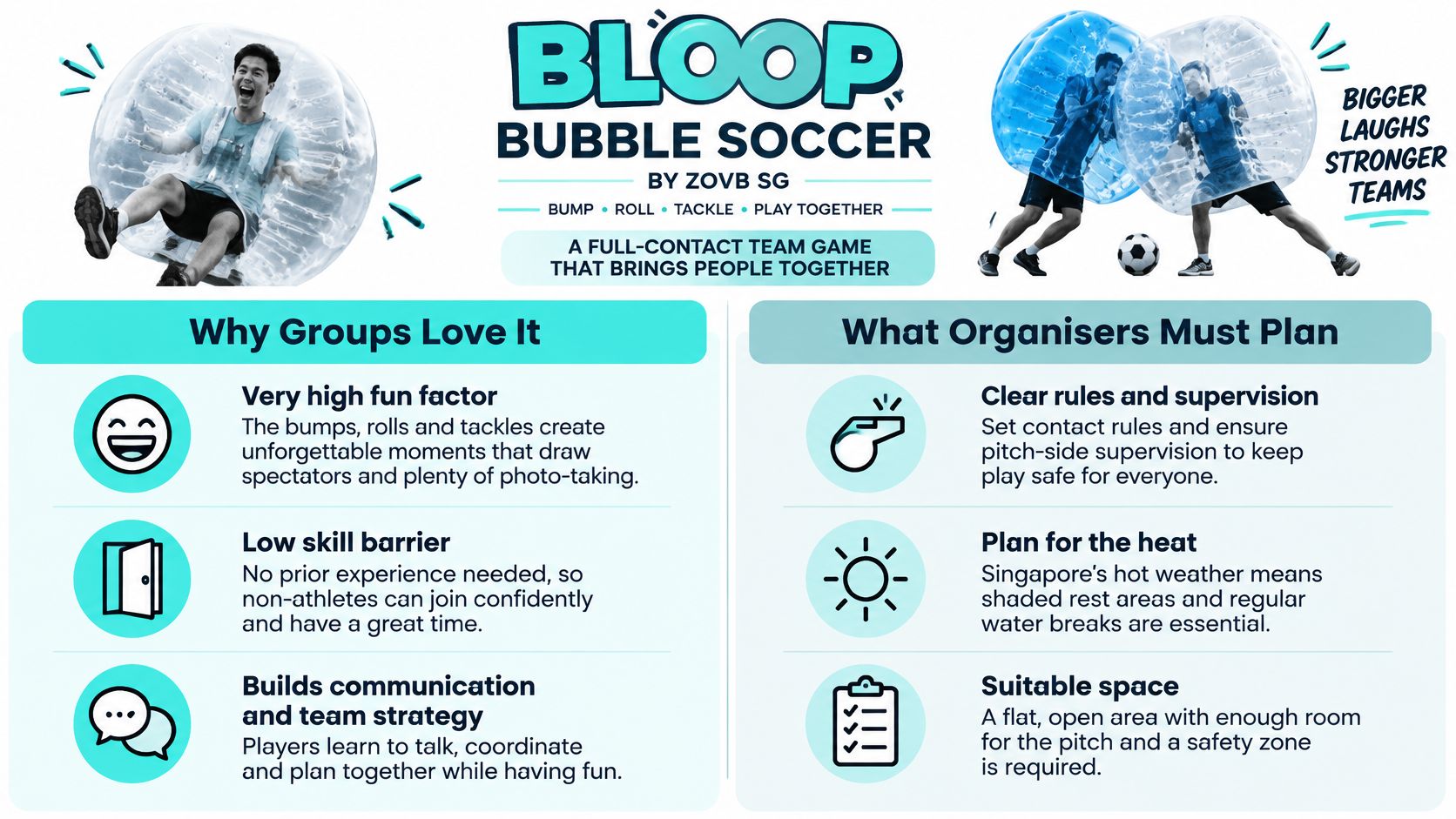
Say a company books a family day for 60 staff and their teenagers. The field is empty, the drinks queue is long, and the first activity has to pull people in within ten minutes. Bubble soccer does that. Each player wears a large inflated bubble from waist to shoulders, teams chase a ball on a marked pitch, and collisions that would end any other game are the fun part because nobody gets hurt. A 15-year-old and a 45-year-old compete on level terms, which is why it holds up at corporate family days, school sports days and birthdays with mixed-age guests.
ZOVB SG brings the suits and equipment to your chosen venue, so the pitch you pick is the pitch you get. Walk the ground first for drains, sprinkler heads and slope; grass is kinder on falls, and a school hall gives you a rain option if the afternoon turns. The Bloop Bubble Soccer game guide covers suit fitting and the basic rules if you need to brief a marshal.
- Corporate family day: run it as a department tournament with a visible ladder on a whiteboard.
- School sports day: house teams, four-minute matches, points pooling toward the overall house score.
- Outdoor birthday party: one feature activity with adults rotated in. For a smaller group, ZOVB SG lists a 10-player Bloop Bubble Soccer party package at $540 for a 1.5-hour session.
Set the contact rule before the first whistle. No deliberate tackling above the bubble, no pushing from behind, no charging a player who is already down. Say it out loud, twice.
Two mistakes cost organisers here. First, long rounds: rotate players in four-minute rounds so nobody cooks in the suit, and station one marshal per pitch to reset play. Second, scheduling: run matches early morning or after 4pm, because the suits trap heat. Screen players for relevant medical conditions before the day, and make sure the provider's safety briefing happens before the first match. If ZOVB SG facilitators are running your session, they explain the game and manage the matches, but the call on who plays still sits with you.
2. Kin-Ball (Giant Ball Team Game)
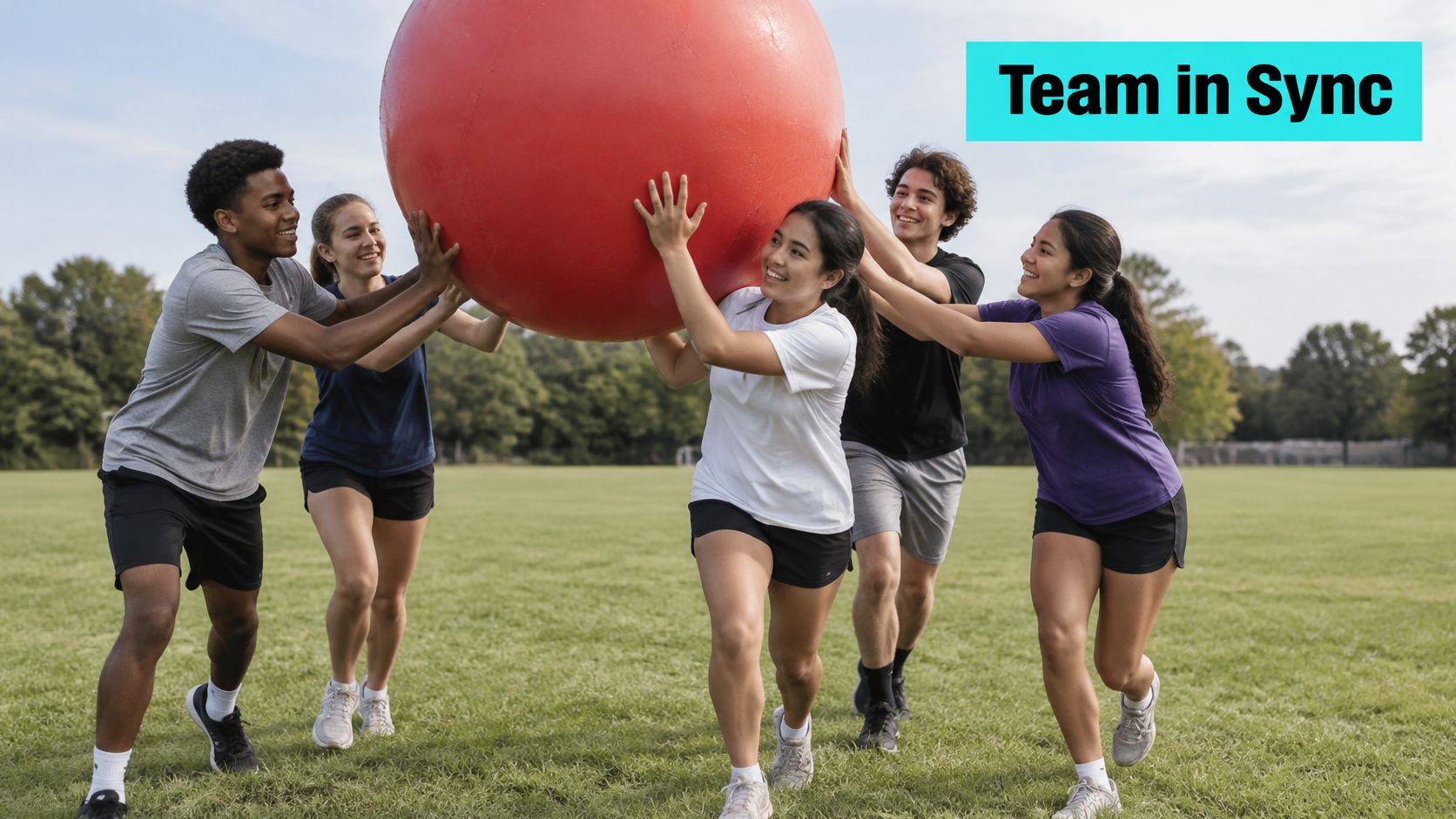
A ball 1.2 metres across rewrites the physics of a team game. Nobody can carry it, nobody can hide behind a teammate, and every point depends on three people holding the same object at the same moment. Kin-Ball runs with three teams, not two: one team serves the giant ball into the air while calling another team's colour. There's no bench and no squad sitting out, which is exactly what you want from a bonding session where two shy students would otherwise drift to the back.
Why schools take to it quickly
Every secondary-school student in Singapore must take part in a co-curricular activity, and physical sports is one of four recognised CCA groups, according to the MOE CCA overview. MOE also allows students to initiate activities with school approval. That matters commercially: a Kin-Ball rotation slots into a structure schools already run, and a student leader can own the warm-up while your facilitator handles scoring.
A worked example. A 90-minute inter-class session with 48 students splits into four groups of 12, plays a five-minute practice round per group, then runs three timed matches with two-minute breaks. That's roughly 45 minutes of actual movement per student with no queue longer than a water break. For a corporate version, mix departments into each trio so the calls have to be learned between strangers.
Practical tips that save the session:
- Practise the calls first. One unscored round where teams only serve and call, no diving.
- Reserve a shaded spectator zone. The ball play is lively and teens will need breaks.
- Check inflation and seams before the first serve, and keep a spare.
- Cap team size at four so everyone gets a hand on the ball each rally.
For groups at the younger end of the teen range, these team building games for 10 to 12 year olds scale down well.
3. Spikeball (Roundnet Team Game)
Most game lists ignore the thing standing between your group and any physical activity: the phone. An Institute of Policy Studies working paper on Singapore teens reports average screen use of 8 hours 21 minutes a day, with smartphones and computers the most common devices, per the IPS study on connected yet conflicted teens. Confiscating phones at the gate buys you sulking. A short, fast format with a visible scoreboard buys you attention.
Spikeball is built for that. Teams of two stand around a small circular net, hit the ball off the net in a rally, and try to make the other pair miss or send it out of play. Rallies last seconds, the score moves constantly, and one court fits into a space a football game can't.
Keep phones in pockets, not in a bag. Then give the group a reason to forget them for four minutes at a time.
How to run it at scale:
- Set up four to six nets and run a round-robin, so nobody waits more than one match.
- Pair people who don't work together and change partners after each round.
- Use timed rounds of seven minutes rather than first-to-21, which keeps the schedule honest.
- Shade the waiting area. In Singapore, players who sit in direct sun stop volunteering.
A community carnival version works well as a "beat the pair" booth with a leaderboard and a small prize for the longest rally. At a corporate bonding day, run it as a ladder over two hours and let teams drift back between other stations.
4. Tchoukball (Non-Contact Team Handball Variant)
Ask a room of 15-year-olds to split into teams and watch which ones go quiet. Tchoukball is the answer to that, because the game is designed so that strength and speed don't decide it. Players pass a ball and score by throwing it onto a trampoline-like rebound frame, and defenders can't intercept passes. No contact, no blocking, no collisions at the goal. Fair play is a rule, not a suggestion.
That design choice matters more than most organisers realise. Singapore's National Youth Mental Health Study found severe or extremely severe anxiety symptoms among 27.0% of surveyed Singaporeans aged 15 to 35, and severe or extremely severe depression symptoms among 14.9%, according to the Institute of Policy Studies presentation of the study. A game that can publicly humiliate a nervous participant is a bad choice for a school or corporate setting, however entertaining it looks.
Practical guidance for mixed-confidence groups:
- Score cooperation. Award a point for three different passers in a rally, not just for the goal.
- Offer non-playing roles with status. Referee, scorer, equipment marshal. Rotate so nobody is parked there all day.
- Assign teams yourself. Count off by number rather than letting friend groups form, or the same three people get picked last.
- Debrief for two minutes. Ask what made a rally work, and who called it.
Here's the Tchoukball Singapore guide to how it works in a team bonding setting. Two rebound frames, a court with marked zones and a 10-minute skill demonstration before the first match is all you need. Use simplified scoring for younger players, and rotate positions every match so the tall kid isn't permanently the shooter.
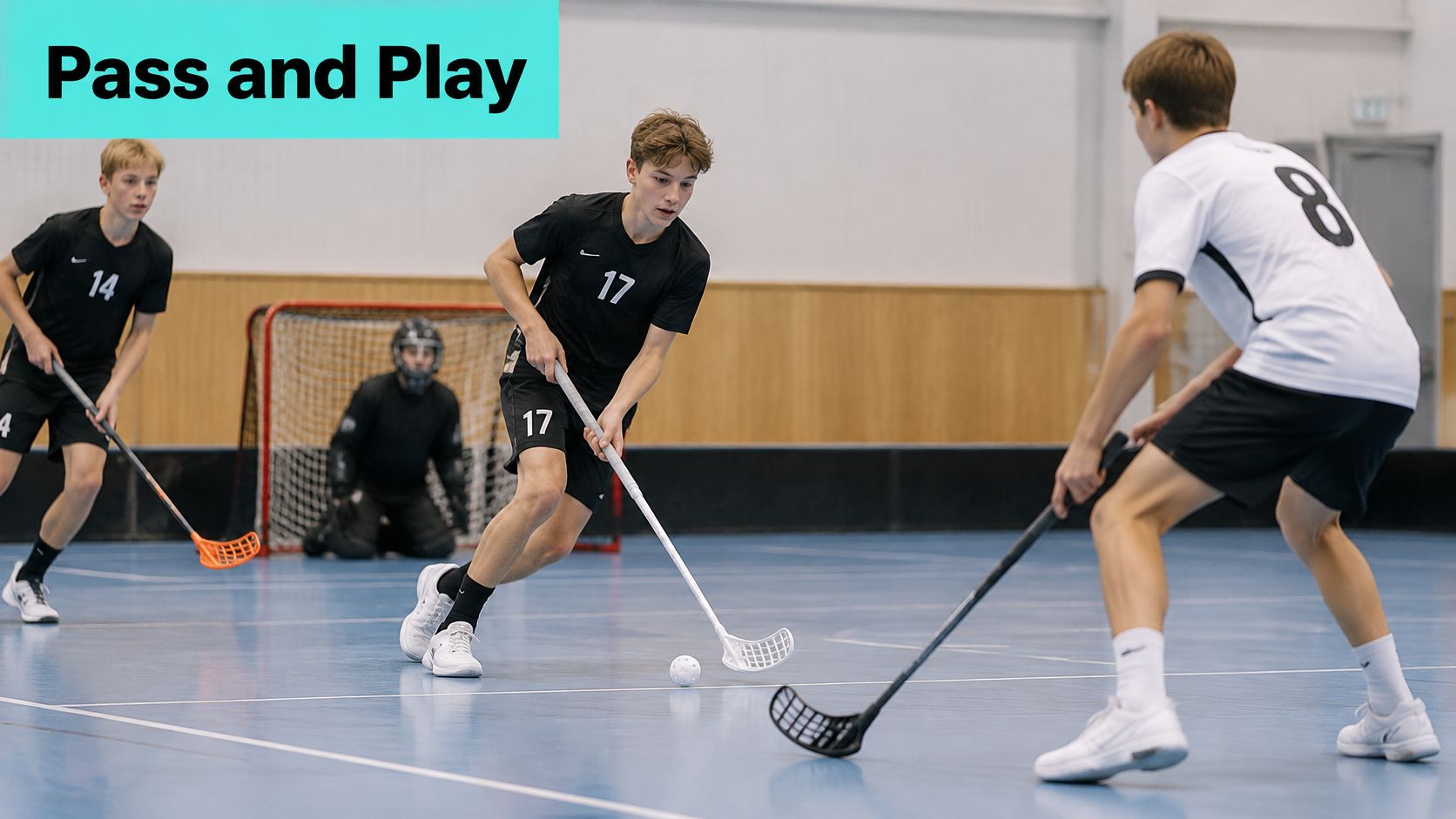
5. Floorball (Indoor and Outdoor Stick Game)
Floorball is the closest thing to a school-friendly invasion game you can hand a mixed group: plastic sticks, a lightweight perforated ball, limited body contact, and rules a 13-year-old can learn in five minutes. That matters because schools are already set up for it. The 2024 PE syllabus requires schools to offer each student at least five different physical activities drawn from at least two of three game categories, each with at least 16 hours of curriculum time. Floorball sits squarely in the territorial-invasion category, so you're selling into a format teachers already teach.
The demand signal is there too. Physical sports made up 35.2% of listed CCA groupings in Singapore's schools, according to the MOE CCA dataset on data.gov.sg. Read that correctly: it describes the spread of school activities, not how many schools rent outside equipment. The useful takeaway is that physical, structured group activity is familiar ground for school buyers.
Running a floorball block that doesn't drag
- Pair strong with new. Two experienced players per line, no more.
- Short periods. Eight-minute matches at a carnival, 15 at a corporate league.
- Test the surface. Slippery tiles and polished hall floors change the game; move it or shorten strides.
- Count the kit before the day: sticks, balls, goals, bibs, spare balls.
- Warm up with a stick-handling drill for ten minutes before the first match, which cuts early knocks.
For outdoor pitches, plan around rain with a hall backup, and shade the rest zone. Indoors, a school hall handles two courts at once comfortably, which is the practical ceiling for a 40-person group.
6. Cornhole Toss (Bean Bag Target Game)
Every programme needs one station where nobody is out of breath. Cornhole is that station: players toss bean bags onto a sloped board with a hole at the far end, scoring for landing on the board or dropping it through. It costs almost no energy, which is exactly why it earns a place in a rotation that would otherwise be four high-intensity games in a row.
The national guidance backs the mix. Singapore's physical-activity guidance recommends children and youth do vigorous-intensity aerobic activity plus muscle- and bone-strengthening exercises at least three days each week, and encourages variety for fundamental movement skills, per the Sport Singapore physical activity guidebook. A carnival or sports day that runs only one repetitive activity misses that. Cornhole is the low-intensity counterweight that lets the same group recover, keep playing and include grandparents at a family day.
A worked example. Four zones at a family day: bubble soccer, cornhole, a relay and water tag. Cornhole sits next to the drinks point with three boards in a row and a tally sheet, catching the guests who don't want to run. Points from cornhole feed the same team score, so it isn't a side show.
Quick setup notes:
- Line up three or four boards to keep queues under two minutes.
- Put boards in shade. Glare off a painted board makes the hole invisible.
- Mix ages per team. A six-year-old and a grandparent score together.
- Make the score visible with a chalkboard or flip chart at the station.
7. Combat Skirmish Laser Tag (Team Tactical Game)
Tactical games give the kids who don't play sport a role. That's the whole case for laser tag. Players wear laser-equipped gear, tag opponents and complete objectives inside a bounded arena, which means the fast kid and the careful kid both contribute. Movement is incidental to the objective, so a group that hates running still gets 40 minutes of walking, crouching, sprinting in short bursts and talking.
The participation picture in Singapore makes the point. A 2025 study of 566 youths aged 15 to 24 found that 38.7% reached health-enhancing physical-activity levels while 18.4% were classified as inactive, according to the Annals of the Academy of Medicine, Singapore. Formats that require a baseline of fitness exclude a chunk of your guest list. Formats built around objectives pull them in.
Brief like a coach, not a referee. Give each squad three roles, scout, support and attacker, and let them assign it themselves. The talking is the team building.
How it plays out across formats:
- School bonding camp: 20-minute rounds with a debrief between each, so students adjust strategy.
- Corporate team day: objectives that require holding a position, which forces communication under time pressure.
- Birthday party: younger teens get shorter rounds, tighter arenas and simpler objectives.
Practical points. Walk the arena for trip hazards before the first round, and mark safe zones and boundaries clearly. Cap round length at 20 minutes with water breaks between, and keep a marshal outside the arena for kit checks. Finish with a two-minute debrief that asks which role felt hardest, which turns a shooting game into a conversation about how teams organise.
8. Water Tag (Outdoor Water Team Game)
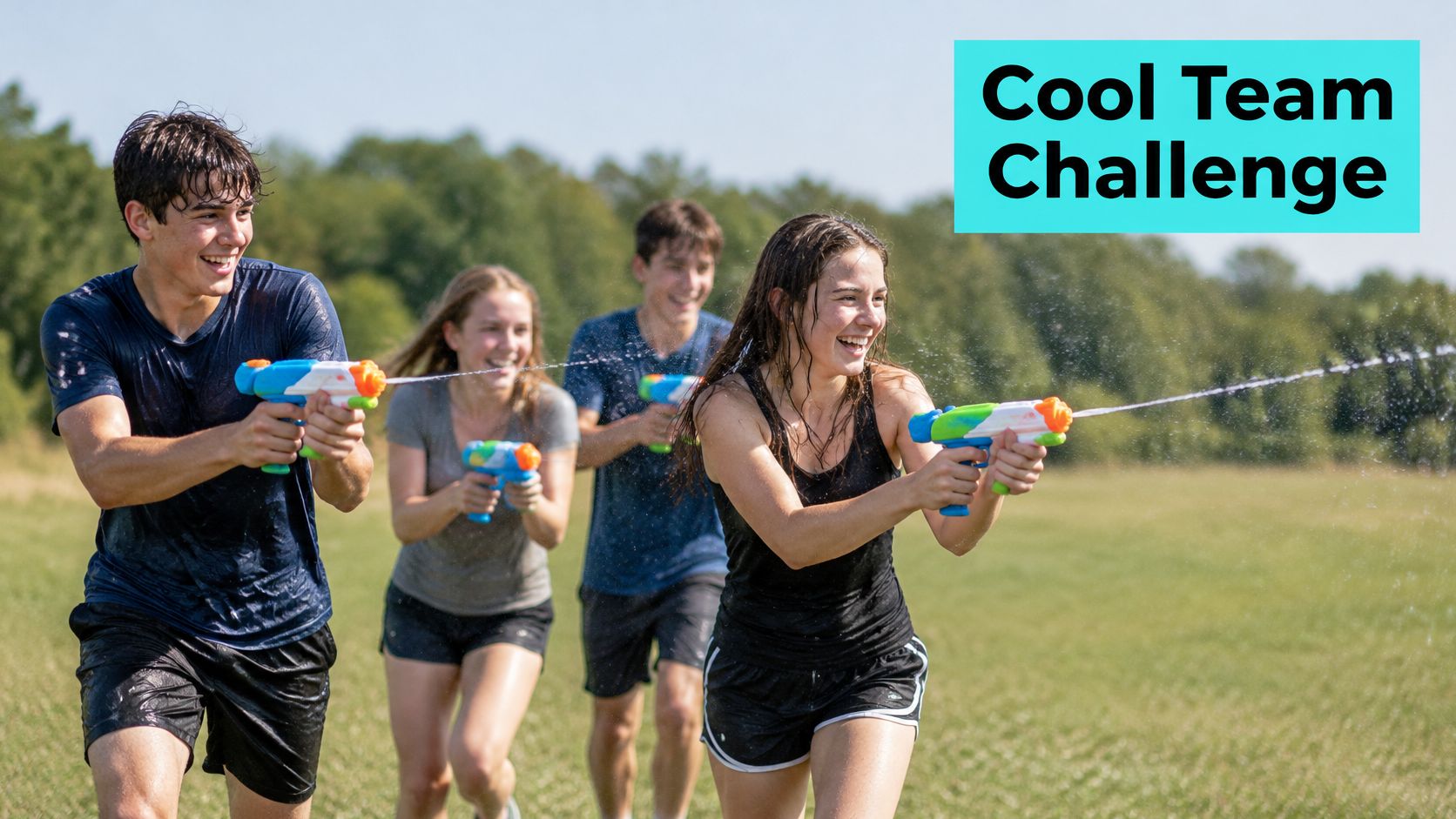
Water Tag is the only format here that gets better as the afternoon gets hotter. Teams use water guns or water-based equipment to tag opponents and complete objectives, which keeps a group cool while they run around. That combination is why it works at family days, school sports days and birthdays during the hottest months, and why it fails utterly without a dry changing area and towels.
The appetite for active teen participation is real. The 2023 National Sport and Exercise Participation Survey, based on 4,142 Singaporeans, found sport and exercise participation was highest among teens, and teen participation has risen since 2020, per the Singapore Sports Council survey findings. Schools run outdoor programmes at real scale as well: more than 36,000 students took part in NParks' CIN Playtime Series and BioBlitz for Schools programmes in 2025, per the National Parks Board annual report.
Run it properly and it's the highlight of a hot-weather event:
- Set boundaries and safe zones before water is filled, especially for the youngest players.
- Provide towels, spare clothes and a dry zone where bags and phones stay.
- Go late afternoon. Heat stress builds during a full day outdoors.
- Watch the sky. Lightning stops play; have an indoor rotation ready.
- Fill from a tap point you've checked, not a distant dribble.
Comparing the Top Team Building Games for Teens in Singapore
| Game | Intensity Level | Group Size & Format | Best Event Type | Space Needed |
|---|---|---|---|---|
| Bloop Bubble Soccer (ZOVB SG Bubble Soccer Rental) | Very high | Small teams, typically 3–5 per side | Corporate family days, school sports days, outdoor birthdays | Flat, open pitch with a safety zone |
| Kin-Ball (Giant Ball Team Game) | Moderate | Teams of three work together under one ball | School sports days, corporate family days, community carnivals | Large, flat open area |
| Spikeball (Roundnet Team Game) | Moderate, with fast short rallies | Pairs; rotating rounds or tournaments | Corporate bonding, school breaks, backyard gatherings | Small, flat area |
| Tchoukball (Non-Contact Team Handball Variant) | Moderate | Typically seven per side; adaptable for smaller groups | School sports days, mixed-gender events, corporate challenges | Court or marked playing area |
| Floorball (Indoor and Outdoor Stick Game) | High | Five outfield players plus a goalkeeper per team | School tournaments, corporate leagues, community sports events | Indoor court or flat outdoor surface |
| Cornhole Toss (Bean Bag Target Game) | Low | Pairs or teams take turns; multiple lanes can run in parallel | Family days, relaxed corporate events, birthdays | Compact area for boards and throwing lanes |
| Combat Skirmish Laser Tag (Team Tactical Game) | Moderate to high | Teams compete in objective-based rounds | Corporate team-building, school camps, teen birthdays | Defined indoor or outdoor arena |
| Water Tag (Outdoor Water Team Game) | High | Teams play in a marked zone; rules can suit mixed ages | Family days, school sports days, outdoor birthdays | Bounded outdoor area with water access |
Plan Your Teen Team Building Event with Confidence
The best team building games for teens match the group's energy, the venue's footprint and Singapore's climate, and every game on this list can be combined into one programme rather than run as a single activity. Pair one high-intensity format with one low-intensity station, add a tactical or cooperative game for the quieter participants, and keep a water option or an indoor backup depending on the season. That structure holds whether you're filling a school field for 200 students or a condo function room for 20 teens.
ZOVB SG brings the games, equipment and facilitators to your chosen location, so guests don't travel to a venue. Facilitators explain the rules, manage the activities and keep teens engaged, and programmes are adjusted to the participants' age and physical capability. Packages combine multiple games and are customised to your participant numbers and event duration, and school groups can request special rental rates for camps and CCA or leadership programmes.
Before you confirm anything, sort the boring details:
- Venue footprint. Confirm the playing area, surface and whether a hall is available as rain backup.
- Timing. Two hours of activity beats four hours with bored teens; book shade and water breaks.
- Group profile. Note ages, fitness and any medical conditions on the booking form.
- Scoring. Decide in advance how stations feed an overall team score, or the day has no shape.
For wider event logistics, this youth club event planning guide covers scheduling and volunteer coordination. Then send your date, venue, activity list and headcount for a quotation, and confirm once the programme and pitch plan are agreed.
A teen sports day or birthday only works when the games suit the venue and the weather, not just the photos. ZOVB SG supplies Bloop Bubble Soccer, Kin-Ball, Spikeball, Tchoukball, floorball equipment, cornhole, Combat Skirmish Laser Tag and Water Tag as rentals across Singapore, with facilitators who run the rules and keep the rounds moving. Send your date, venue and estimated headcount through the site and we'll reply with a quotation built around the number of participants and hours you have.