Collaborative team-building activities align groups around shared goals, structured interactions, and measurable skills development to raise employee engagement and workplace morale. This guide explains why collaborative exercises matter, which activity types deliver the strongest engagement, how gamified formats increase participation, and practical ways to measure impact. Readers will learn concrete indoor, outdoor, hybrid, and CSR-friendly options, mapped to skills such as communication, leadership, and problem-solving, plus implementation tips for different team sizes and locations. The article highlights evidence-backed mechanisms—role clarity, psychological safety, and shared challenge—that translate event dynamics into observable workplace behaviours. Along the way we reference provider capabilities and equipment options to illustrate real-world implementation choices without replacing the topic-first guidance. Expect clear lists, EAV comparison tables, and concise measurement frameworks you can use to plan events that boost collaboration, retention, and measurable engagement.
How Collaborative Team-Building Activities Enhance Employee Engagement
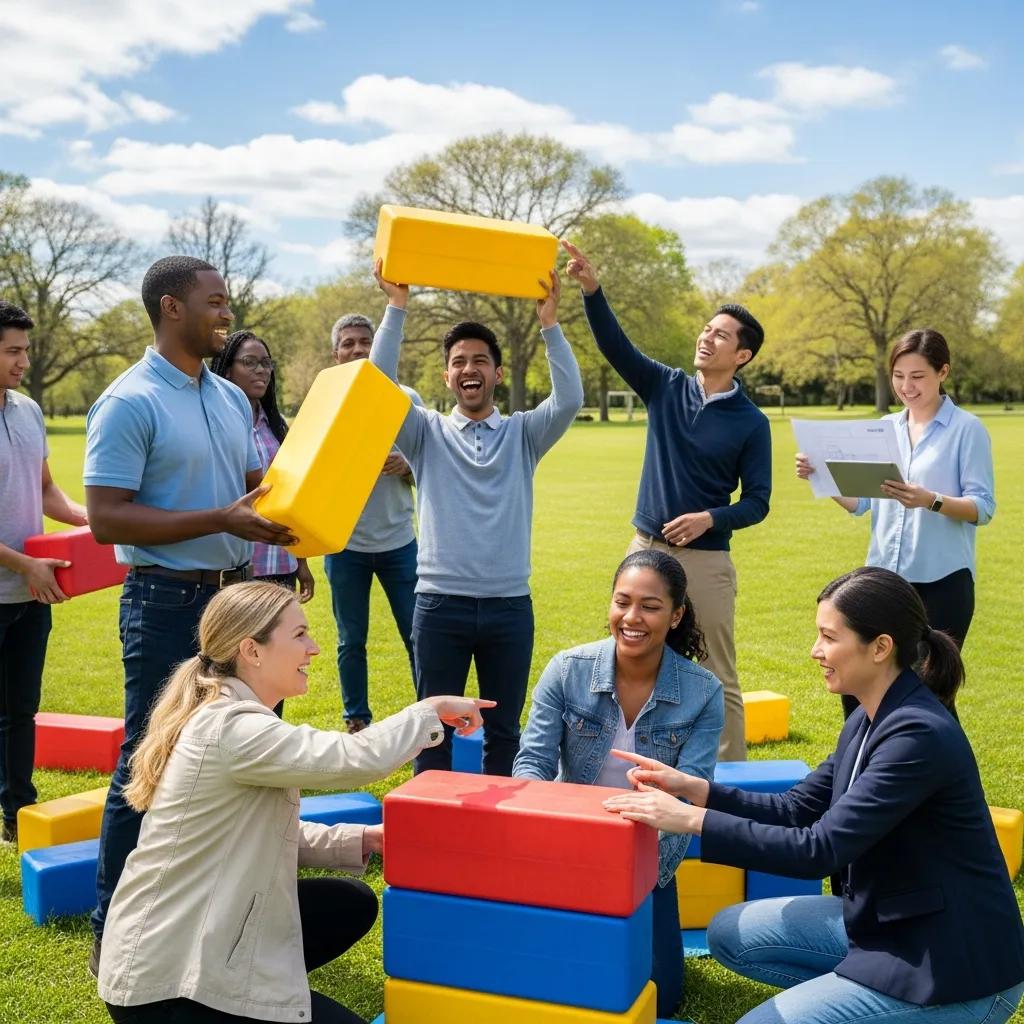
Collaborative team-building activities create structured opportunities for employees to practice working toward a common objective, which strengthens belonging and motivation. By combining shared goals with controlled challenge, these activities improve communication patterns and surface role clarity, producing faster alignment back at work. Recent studies and organisational practice indicate experiential learning increases retention of teamwork skills compared with passive training, which supports sustained behaviour change. Understanding these mechanisms helps planners choose activities that map directly to prioritized competencies. The next section explains how specific collaboration exercises improve morale and productivity through psychological safety and role-based feedback.
How Do Team Collaboration Exercises Improve Workplace Morale and Productivity?
Team collaboration exercises improve morale by increasing interpersonal trust and creating repeatable experiences of success that individuals link to team identity. They improve productivity because teams rehearse coordination, decision sequencing, and feedback loops in low-risk settings, which shortens real-work coordination cycles. For example, a timed problem-solving challenge can reveal communication bottlenecks and let teams practice concise handovers, reducing delays in future projects. Observational measures after events often show clearer role distribution and quicker conflict resolution, which supports ongoing performance gains.
What Key Skills Do Engaging Team Bonding Ideas Develop?
Engaging team bonding activities intentionally target transferable skills such as active listening, situational leadership, and creative problem-solving through designed constraints and feedback. Each skill maps to specific activity types, enabling planners to choose events that serve development goals rather than pure entertainment. For instance, short simulation tasks emphasise decision-making under pressure, while reflective debriefs convert physical collaboration into improved workplace habits. These skill gains translate to clearer meetings, improved project handoffs, and faster issue resolution.
- Key skills developed by collaborative activities include communication, leadership, problem-solving, adaptability, and trust-building.
- Each activity should specify the primary skill target and a measurable behaviour change expected after the event.
- Structuring debriefs around those behaviours turns experiential learning into actionable next steps for teams.
This list clarifies which competencies to prioritise when designing an event and prepares teams to measure post-event changes.
What Are the Most Effective Corporate Team Building Activities for Boosting Engagement?

Effective corporate team building activities pair clear collaborative mechanics with a debrief that links behaviours to work outcomes. Indoor options focus on communication and role clarity, outdoor options emphasise trust and resilience, virtual formats adapt mechanics for remote participants, and CSR programs combine purpose with collaboration. Selecting activities that map to specific KPIs increases the likelihood that engagement improvements persist. The table below compares activity types by collaborative element and primary skill developed to guide planners.
Different activities deliver predictable collaboration outcomes depending on setting and objective.
| Activity | Collaborative Element | Skill Developed |
|---|---|---|
| Problem-solving workshop | Shared constraint solving | Critical thinking & communication |
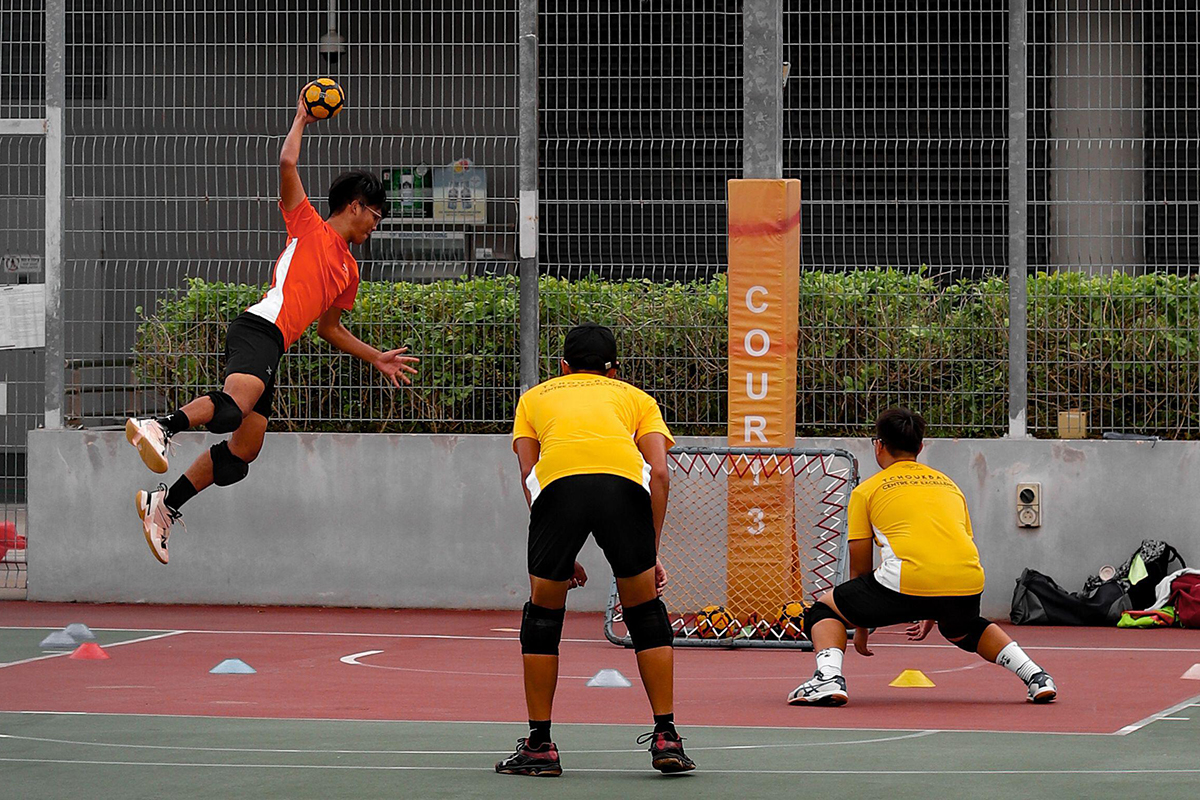
| Kin-Ball session | Multi-party coordination | Team coordination & trust |
| DISC profiling + exercises | Role awareness & feedback | Leadership & role clarity |
Which Indoor Team Building Activities Foster Stronger Team Communication?
Indoor activities that emphasise constrained information flow or role rotation effectively sharpen communication habits and listening skills. Short structured simulations and facilitator-led DISC personality profiling sessions help teams recognise preferred styles and practise adapting language to different colleagues. Simple equipment, such as game cards or adaptable Kin-Ball variants, can be used indoors to create visible coordination challenges. When planning indoor events, choose activities that allow immediate feedback and reflection to translate new behaviours back into everyday team practices.
How Do Outdoor Team Building Adventures Enhance Collaboration and Trust?
Outdoor team building adventures use environmental challenge and shared risk to accelerate trust and interdependence among participants. Activities like water-based challenges, team obstacle courses, and trust-driven problem sequences require clear signals, mutual support, and contingency planning. Logistics should account for team size, safety protocols, and accessibility to ensure inclusivity and sustained participation. Outdoor formats often produce high-intensity bonding experiences that teams later reference when coordinating under pressure at work.
After this overview of effective activity types, consider concrete programme examples and equipment options a provider can supply. One Dynamics and its ZOVB Singapore offering illustrate how bespoke in-house games and specialised equipment—such as large-format balls or bubble suits—can be integrated into indoor and outdoor programs. These provider capabilities make it simpler to deploy activities while maintaining focus on targeted skills.
How Can Fun Team Building Games for Work Increase Employee Participation?
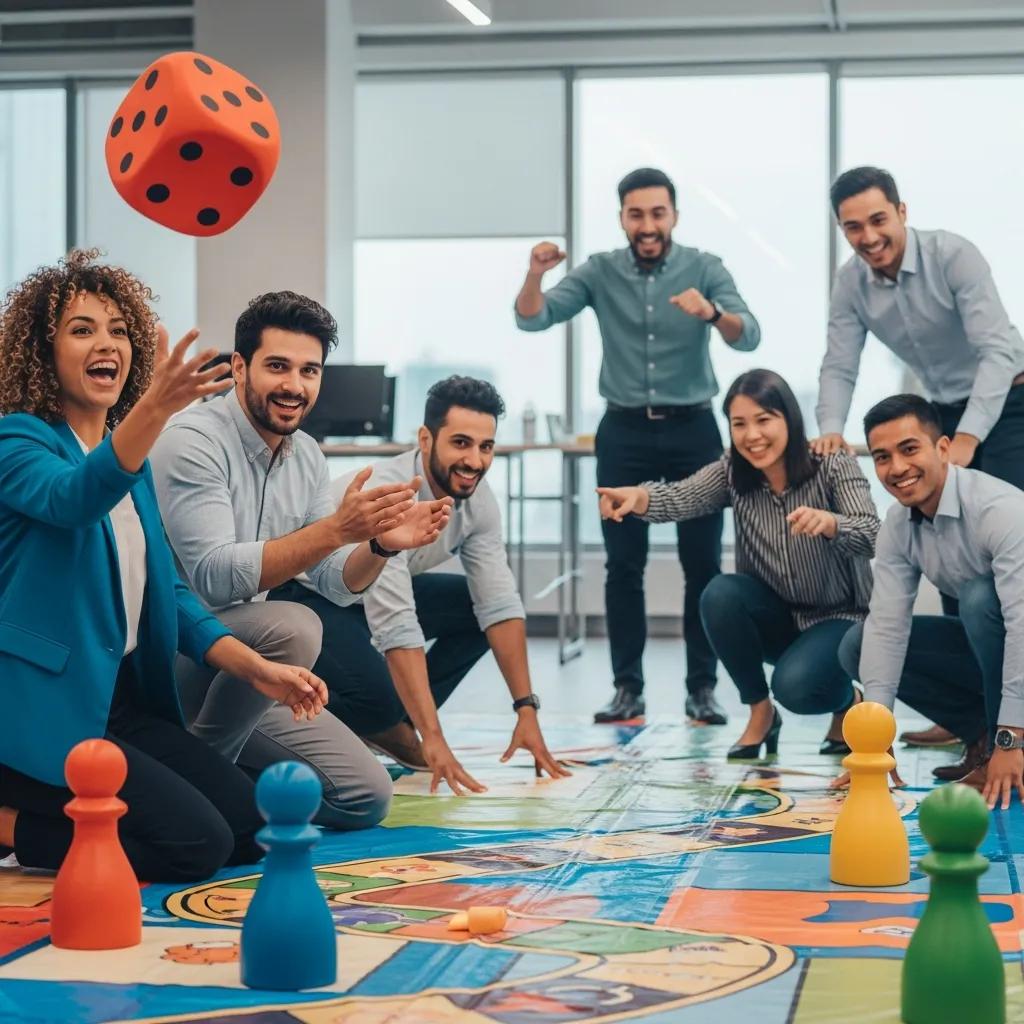
Fun, gamified approaches increase participation by converting abstract development goals into immediate incentives and visible progress. Game mechanics such as timed rounds, rotating roles, simple scoring, and leaderboards tap intrinsic motivators like mastery and social recognition. When rules are easy to learn and consequences are low-risk, more employees join actively and contribute creative solutions. Thoughtful debriefs translate fun behaviours into workplace practices, closing the loop between enjoyment and lasting engagement.
Research indicates that gamified team building can significantly influence user engagement by tapping into different motivational drivers.
Gamified Team Building: Factors Affecting User Engagement and Corporate Culture This paper presents a study on data retrieved from a gamified team building application, which promotes employees’ joint sport activities. The aim of this work is to identify and evaluate behavior usage patterns, and user engagement indicators based on interaction data gained from the application and to determine key factors affecting engagement levels. In order to determine behavioral patterns, users have been tested for system use, for participation at events and competitions, and for having tendency in social interactions. The study classified three typologies of engaged users: the Achievers who are motivated by the reward of achieving long-term goals, the Socializers who enjoy interacting with others and the Conquerors who like struggling until they eventually achieve victory by defeating others. We were also able to reveal additional influencing factors beyond personal behavior patterns like the corporate culture and the importance of the ‘organizers’. An empirical study on key factors affecting user engagement in a gamified team building environment, S Fodor, 2020
What Makes Game-Based Activities Like Monopoly Deal Race and Bloop Bubble Suits Engaging?
Game-based activities succeed when they blend simplicity, meaningful choice, and observable progress into short cycles of play and reflection. Monopoly Deal Race uses rapid decision-making and negotiation under pressure to surface communication patterns, while Bloop Bubble Suits emphasise safe physicality and laughter to lower social barriers. Key mechanics include role rotation, real-time scoring, and short debrief prompts that reinforce observed strengths. Ensuring safety and inclusivity keeps high-energy games accessible, boosting overall participation and morale.
How Do Customized Team Building Programs Cater to Different Corporate Needs?
Customized programs tune variables such as team size, learning objectives, cultural fit, budget, and location to maximise relevance and ROI. A clear checklist helps organisers set priorities: define the target skill, choose an activity format, set measurement methods, and plan logistics and accessibility. Customisation often includes hybrid options that combine live facilitation with virtual activities for remote teams. For organisations seeking turnkey delivery, providers can translate these variables into a tailored proposal and runbooks for execution.
- Customisation checklist for tailored programs: Define primary skill objective and KPI. Choose activity format and setting. Set measurement approach and timing.
How Do You Measure the Impact of Collaborative Team-Building Activities on Engagement?
Measuring impact requires a mix of quantitative KPIs and qualitative observation that together indicate behaviour change. Use pre/post surveys, participation rates, facilitator observations, and short-term business indicators like meeting efficiency to triangulate results. Clear methodology—baseline measurement, immediate feedback, and follow-up at one month—captures both initial engagement spikes and sustained behavioural adoption. The table below lists practical metrics, how to measure them, and typical improvements to expect when activities are well-aligned to objectives.
A compact KPI framework provides measurable signals to evaluate program effectiveness and guide iterative improvements.
| Metric | How to Measure | Typical Improvement |
|---|---|---|
| Participation rate | Attendance & active engagement logs | Higher initial engagement |
| Post-event NPS | Standardised survey within 48 hours | Increased promoter scores |
| Team communication score | Pre/post behavioural survey | Improved clarity and timing |
What Key Performance Indicators Demonstrate Team Building Success?
Key KPIs include participation rate, post-event NPS, observed behaviour change, and short-term productivity indicators such as fewer meeting delays or faster task handoffs. Measure participation immediately, collect NPS within 48 hours, and run behavioural follow-ups at one and three months. Observational rubrics completed by facilitators help translate survey scores into actionable coaching items. Combining these measures yields a reliable picture of both engagement and practical workplace impact.
How Do Case Studies Show the Effectiveness of ZOVB Singapore and One Dynamics Programs?
Case-study snapshots from One Dynamics and ZOVB Singapore illustrate how bespoke programmes and specialised equipment support measurable outcomes for corporate clients. In practice, provider interventions combine tailored activities with structured measurement to document changes in participation and team dynamics for organisations such as OCBC Bank, Tetra Pak, and Schneider Electric. These summaries demonstrate a typical approach: define objectives, deploy a bespoke activity mix, measure immediate engagement, and report follow-up behavioural indicators. Organisations interested in a customised measurement plan can request a proposal that outlines KPI tracking and case-study reporting.
- Case-study takeaway list: Define objectives clearly before program design. Use mixed measures for robust evaluation. Follow up to capture sustained behaviour change.
For bespoke proposals, tailored measurement plans, or to discuss integrating specialised equipment into your next event, contact One Dynamics to request a programme proposal and measurement scope aligned to your objectives.